
Plateau Rainfall and the Gutters It Demands
{{custom_values.city3_h2_1}
}
Sitting up on the plateau, properties across Sammamish catch some of the heaviest sustained rainfall in the region, and the dense evergreen cover that makes the area so green also buries gutters in needle debris. Newer subdivisions and established wooded parcels alike share this pressure: water comes down hard and often, and Douglas fir and cedar drop continuously onto the roof below. A drainage system built for milder conditions stands no chance here. Runs sized at the common 5-inch standard overflow under plateau storm volume, and needle buildup packs corners and downspouts until water has nowhere to go but over the edge and into the fascia. The newer construction that fills much of the area was often fitted with builder-grade gutters chosen for cost rather than climate, which is why so many homes start showing overflow stains within a few winters. Solving it means sizing the system to what the plateau actually delivers. We specify higher-capacity runs and outlets, account for relentless evergreen debris, and plan drainage around the grade of each lot. The aim throughout is to keep water moving off the roof and away from the structure even during the long, soaking storm cycles that define winter at this elevation. Getting that capacity right from the start is what spares a plateau home the recurring overflow and rot that undersized systems guarantee, and it is the single decision that most determines how a property weathers the wettest months.
Evergreen Debris on Wooded Lots
Lasting drainage on a Sammamish property starts with respecting how much water the plateau moves and where it needs to end up. Many lots carry noticeable grade, and runoff that is not carried well past the foundation simply collects downhill against the structure or floods the landscaping. We route downspouts and, where the lot calls for it, connect them to underground drainage so water leaves the property cleanly rather than pooling on clay-heavy soil. The continuous needle fall from surrounding firs makes wider outlets and fine-mesh guards close to essential on wooded parcels, keeping runs clear through the months when overflow does the most harm. Fascia comes first on every assessment, because board that has absorbed seasons of overflow will not hold new gutters securely. For most plateau homes seamless aluminum delivers the capacity and longevity the climate demands, while copper suits the higher-end properties where appearance matters alongside performance. Each of these choices answers the same question: how does this particular Sammamish lot handle heavy, repeated rainfall, and what system keeps the home dry through it. Building around that answer is what separates gutters that last from ones that overflow by January. The newer subdivisions that fill much of the plateau deserve particular scrutiny, since builder-grade runs were often chosen for cost and rarely sized for the rainfall this elevation actually receives. Correcting that early spares a home years of recurring overflow damage.

High-Capacity Seamless Systems
Seamless gutter installation is the starting point for handling the rainfall a Sammamish roof receives. Formed on-site from a single coil of aluminum, seamless runs carry only corner and outlet seams, removing the sectional joints that leak onto fascia during the plateau's long, heavy storm cycles. Given the volume here, we size most systems at 6-inch K-style with wide outlets so runs keep pace with sustained downpours and the constant evergreen debris dropping from surrounding firs. Slope is calculated for complete drainage, and outlet placement is set from roof area and pitch so no single run is overwhelmed when a storm settles over the plateau for days. That capacity-first approach is essential at this elevation, where undersized gutters overflow almost immediately. The finished system sheds water fully, resists the joint leaks that sectional gutters develop fast in this climate, and holds its performance through years of demanding seasonal load. Sizing each install to real plateau rainfall is what keeps a Sammamish home protected rather than fighting overflow every winter. Profile and material still follow the home, with copper half-round reserved for the higher-end properties and seamless aluminum carrying the rest cost-effectively. Because the runs are shaped on the property, they trace the true line of each roof instead of approximating it with pre-cut sections, which keeps the system tight where plateau storms put the most pressure on it. That precision matters more here than almost anywhere, because the margin for an undersized or loosely joined gutter disappears the first time a heavy front parks over the plateau.
Guards for Dense Fir Debris
Guard choice is critical on Sammamish's densely wooded lots, where the needle load rivals anywhere in the region. Coarse screens cannot stop fir needles, which slip through and accumulate in the runs, so we install fine-mesh guards that block evergreen debris and moss while still passing the heavy plateau rainfall. That pairing is exactly what these conditions require, cutting both cleaning frequency and the winter overflow that drives water behind the gutter into soffit and fascia. We confirm the existing system is sound and properly pitched before fitting guards, because mesh does nothing for a sagging or leaking run beneath it. Even with quality guards, the heaviest tree cover warrants an annual inspection to clear fine debris that settles on top after needle drop. The result is a system that stays clear through the wettest, debris-heaviest months with far less manual cleaning, which matters enormously on the large wooded parcels where climbing to clear packed runs every season is both a hassle and a hazard. Keeping organic matter out also slows the moss that flourishes in the plateau's damp shade and the clogs that feed ice buildup during cold snaps. Because the debris here is so consistently heavy, we treat mesh gauge as a deliberate specification rather than a default, matching it to the fir and cedar fall a given lot produces. On parcels ringed by mature evergreens, that careful selection is the difference between a guard that keeps working through years of needle drop and one that simply collects debris on its surface and clogs.
Sloped-Lot Drainage Design
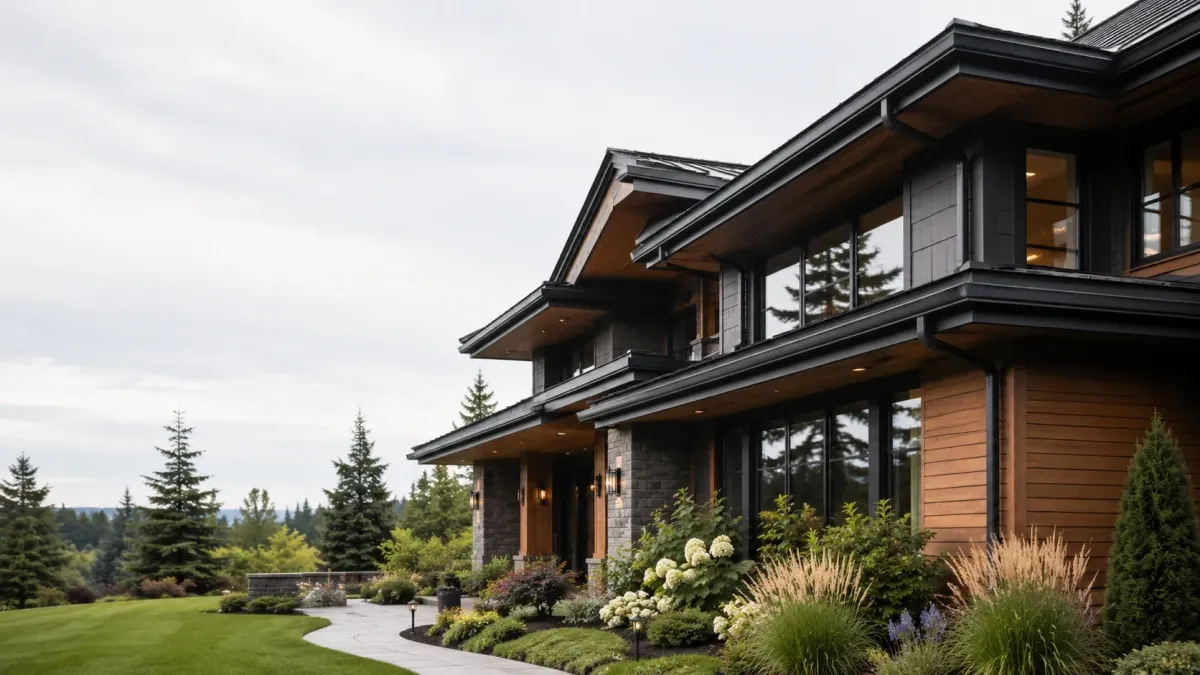
Drainage design carries extra weight on Sammamish's sloped, clay-heavy lots, where runoff has both volume and grade working against the home. Outlets that are undersized or poorly placed back up under plateau rainfall and push water against fascia and foundation. We install high-capacity 3x4 downspouts positioned to move runoff efficiently away from the structure, then route it well past the base of any slope. Because clay soil sheds water poorly and many parcels grade downhill, we frequently tie downspouts into underground drainage, a dry well, or a rain garden so runoff is carried off responsibly instead of pooling against the slab or eroding landscaping. This protects crawlspaces and foundations through the sustained storms common at this elevation. Outlet count and placement come from an actual calculation of roof area and pitch, giving the heaviest rain a clear path off the property. On the plateau, thoughtful drainage is what keeps a Sammamish home dry from the roofline down through the soil around it. The clay that underlies so many lots is the crux of the problem, since it holds water at the surface rather than letting it soak away, so runoff dumped near the wall has nowhere to go but against the foundation. We plan the discharge path to carry water past that zone entirely, accounting for both the grade and the soil so a storm does not simply relocate the pooling. That full-path approach, rather than stopping at the outlet, is what makes drainage on a heavy-soil plateau lot genuinely hold up.
Redmond's Pacific Northwest Gutter Specialists
Proudly serving Redmond, Kirkland, Bellevue, Sammamish, Woodinville and Bothell for 12+ years.
Comprehensive Gutter Installation Services in Redmond
Tailored to Your Needs
From seamless installation to guards, downspouts, and fascia repair, our full range of gutter services is built around the realities of Redmond's Pacific Northwest climate. Explore the options below to find the right solution for your home.
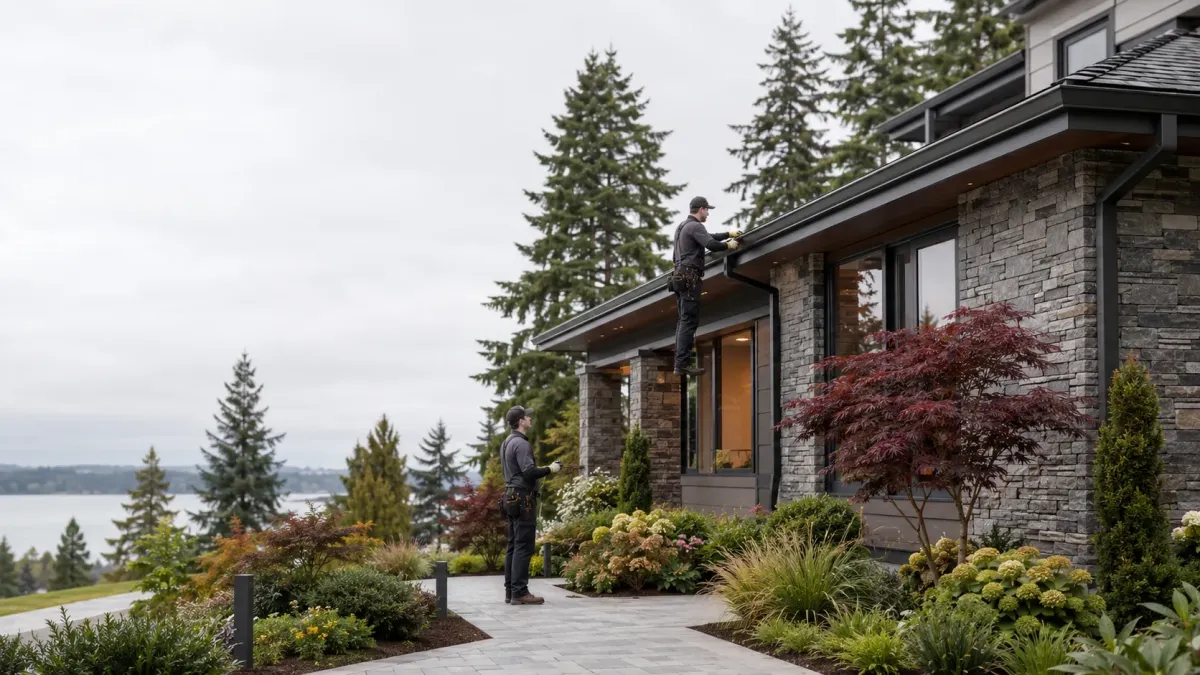
Single-coil seamless aluminum and copper gutters sized for Redmond's rainfall and evergreen debris.
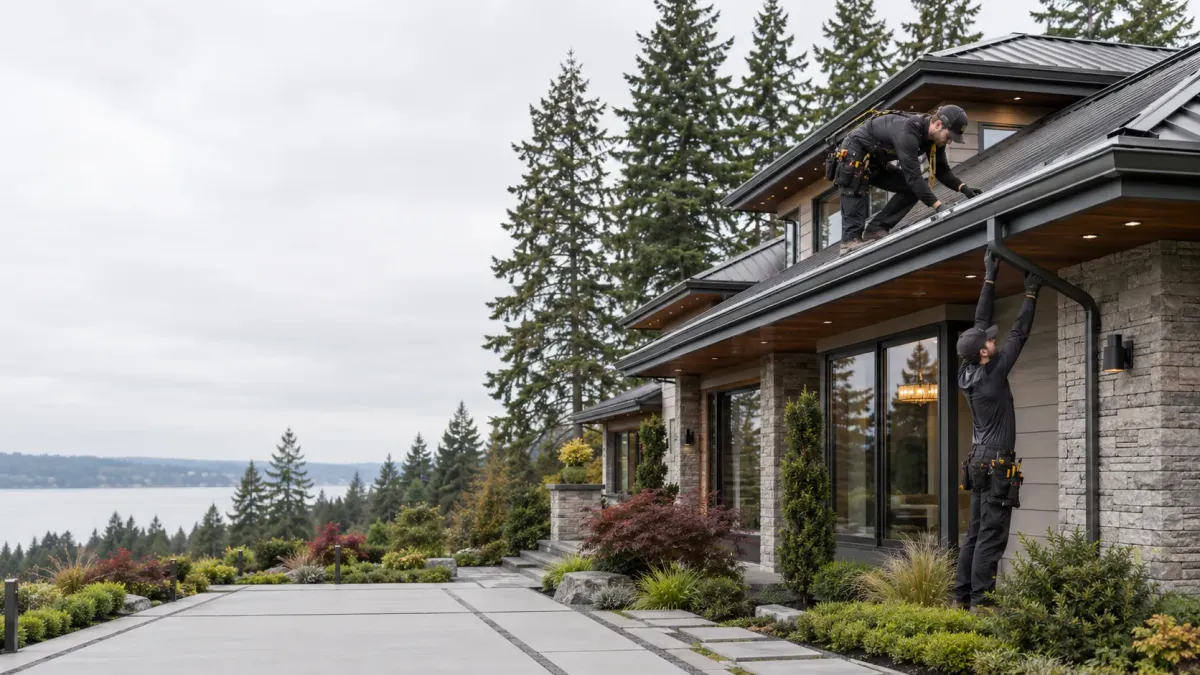
Fine-mesh gutter guards that shed Douglas fir needles and block moss on tree-lined Redmond lots.
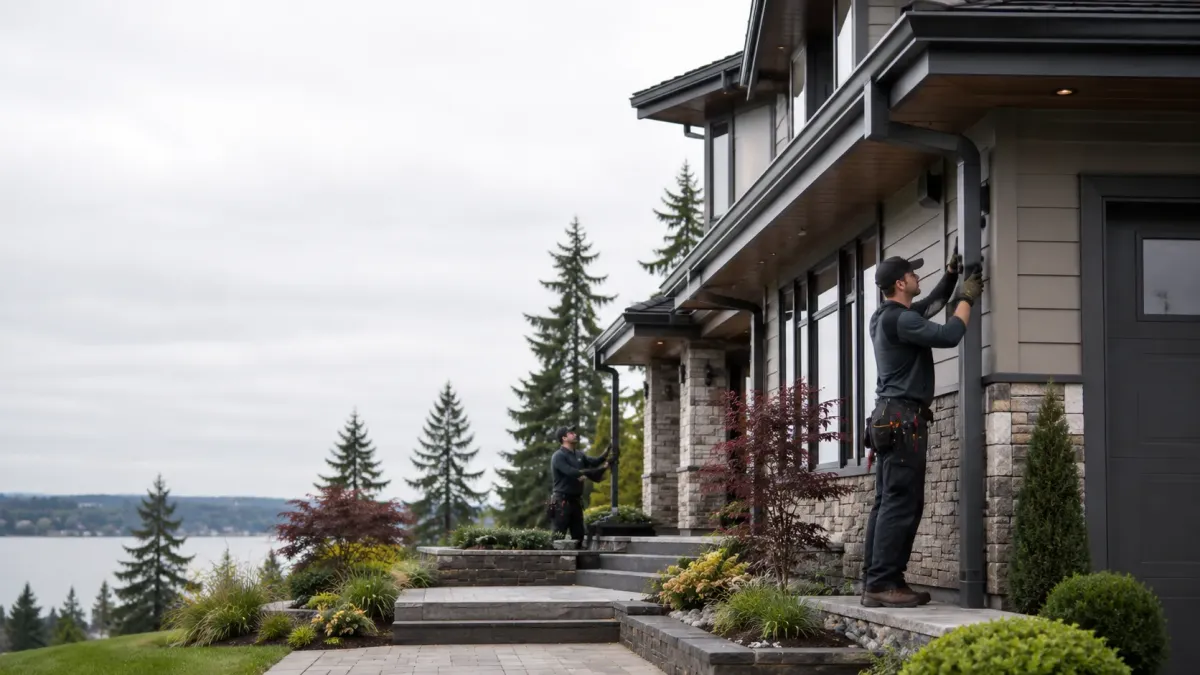
High-capacity downspouts and routing that move Pacific Northwest rainfall away from your foundation.
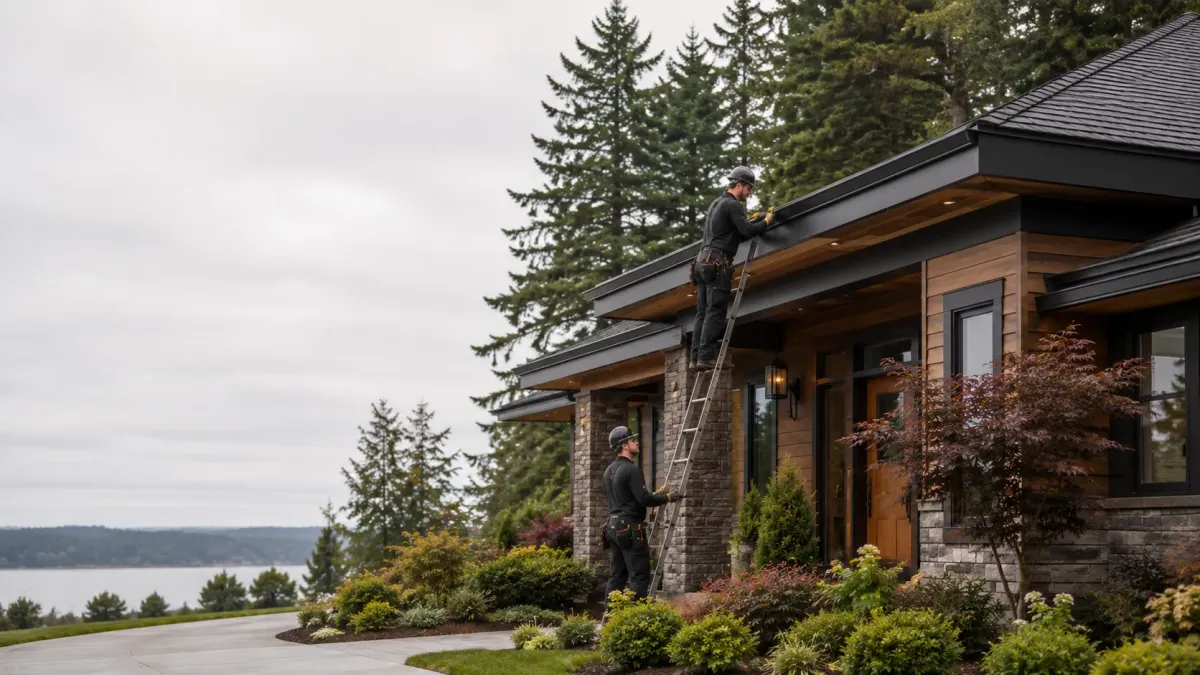
Fascia board repair and replacement to give your new Redmond gutters a sound, lasting mount.
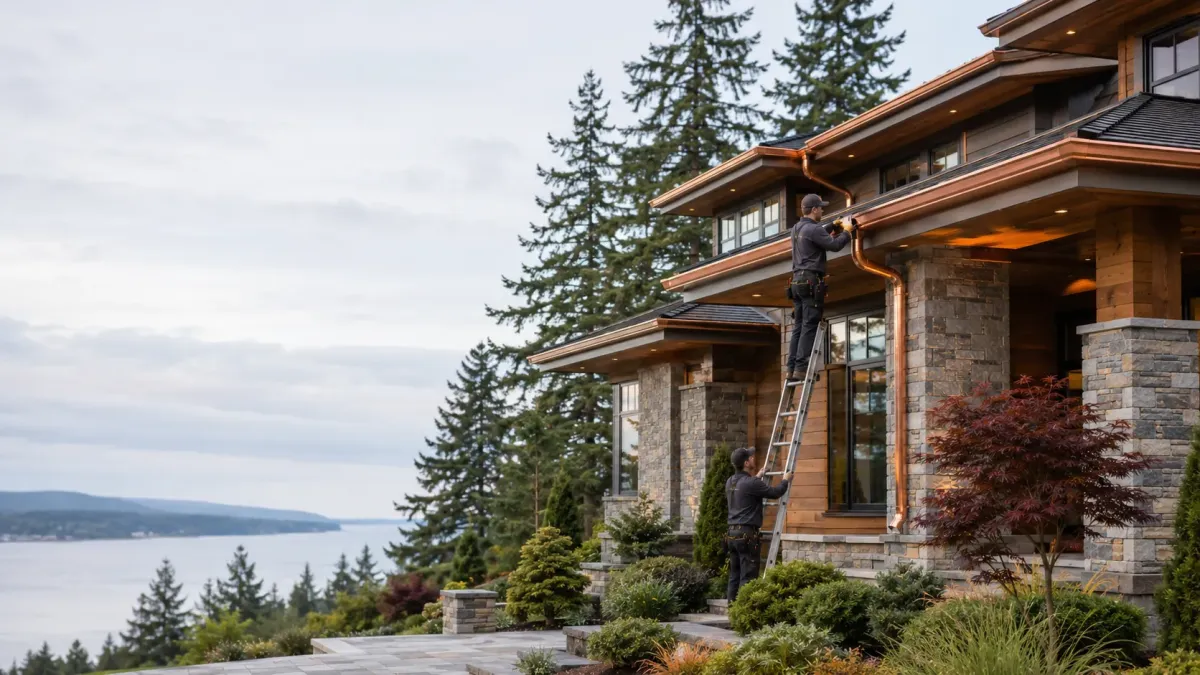
Premium copper gutter systems that resist Redmond's moisture and last for decades.
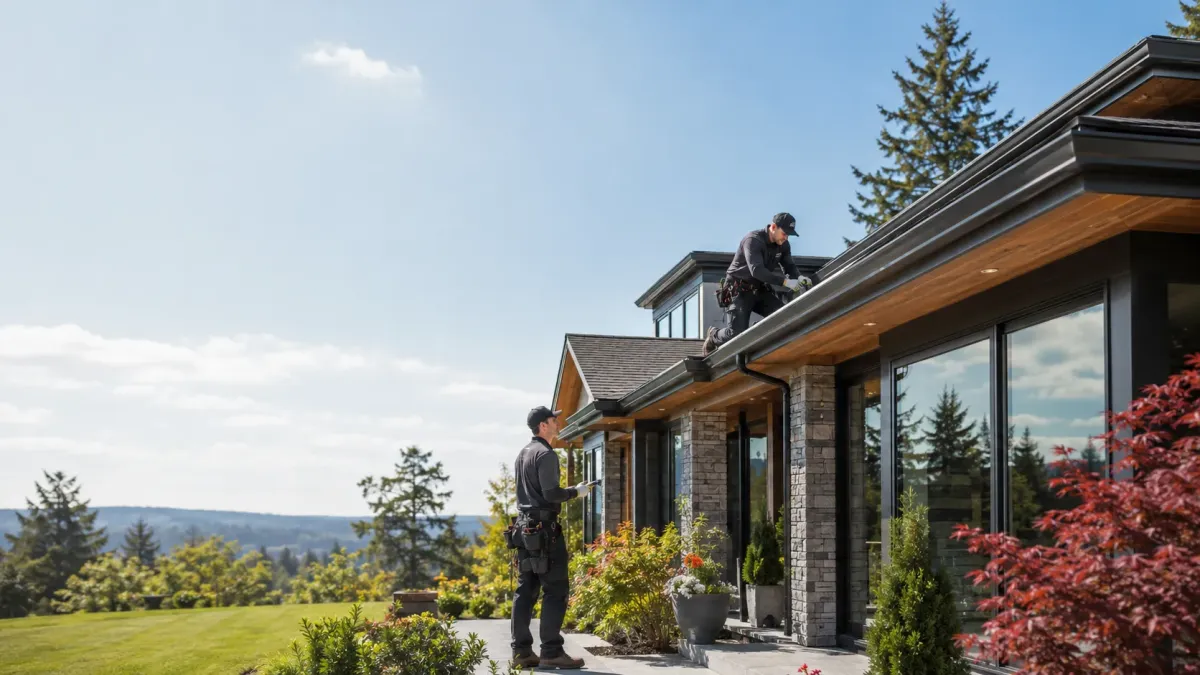
Fast, lasting gutter repair for the sagging, leaks, and overflow common in Redmond's wet climate.
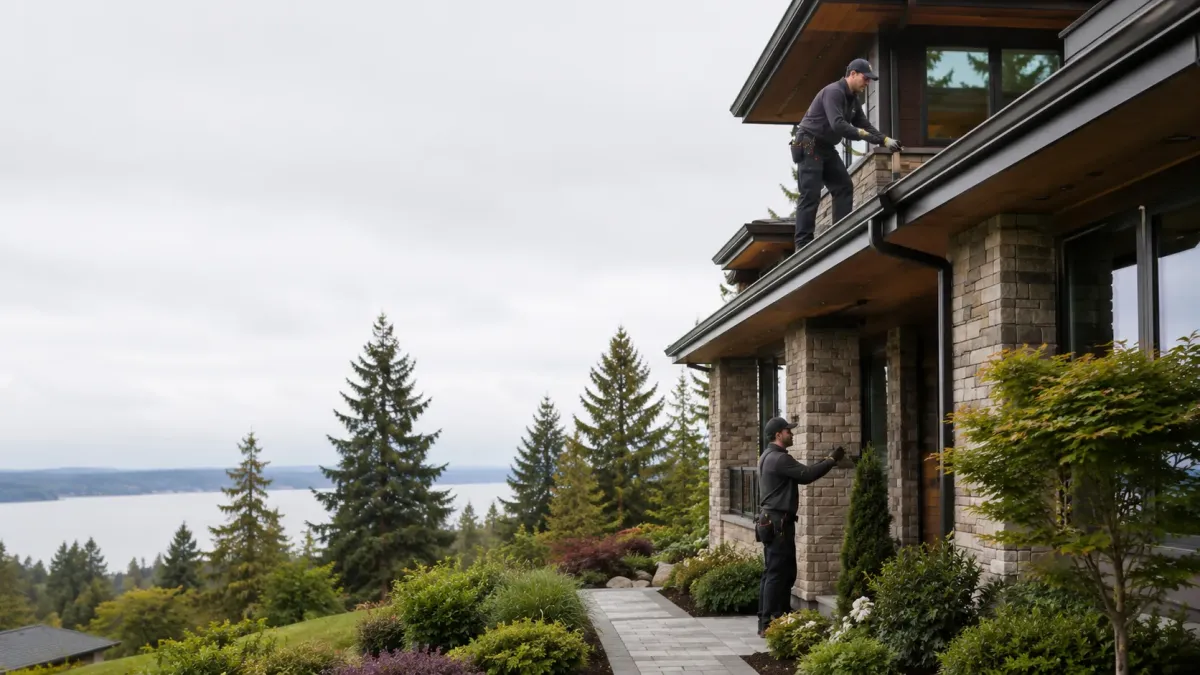
Seasonal gutter cleaning that clears fir needles and moss before winter overflow sets in.
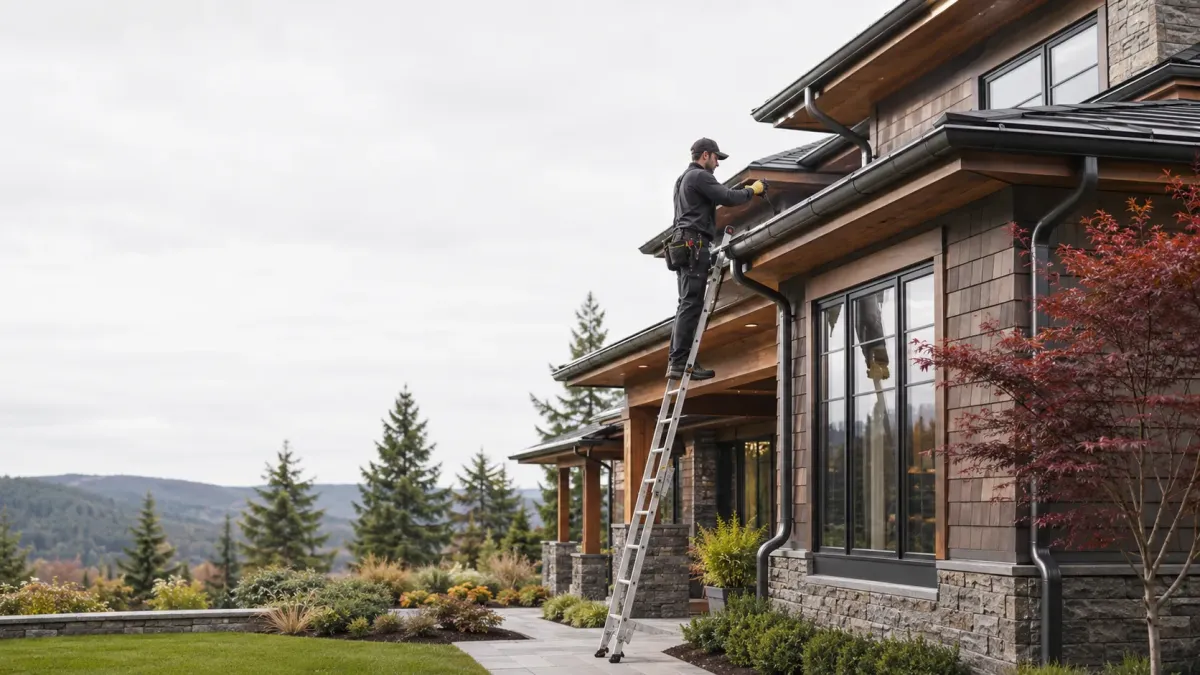
Classic half-round gutters in copper or aluminum that shed debris and suit Redmond's craftsman homes.
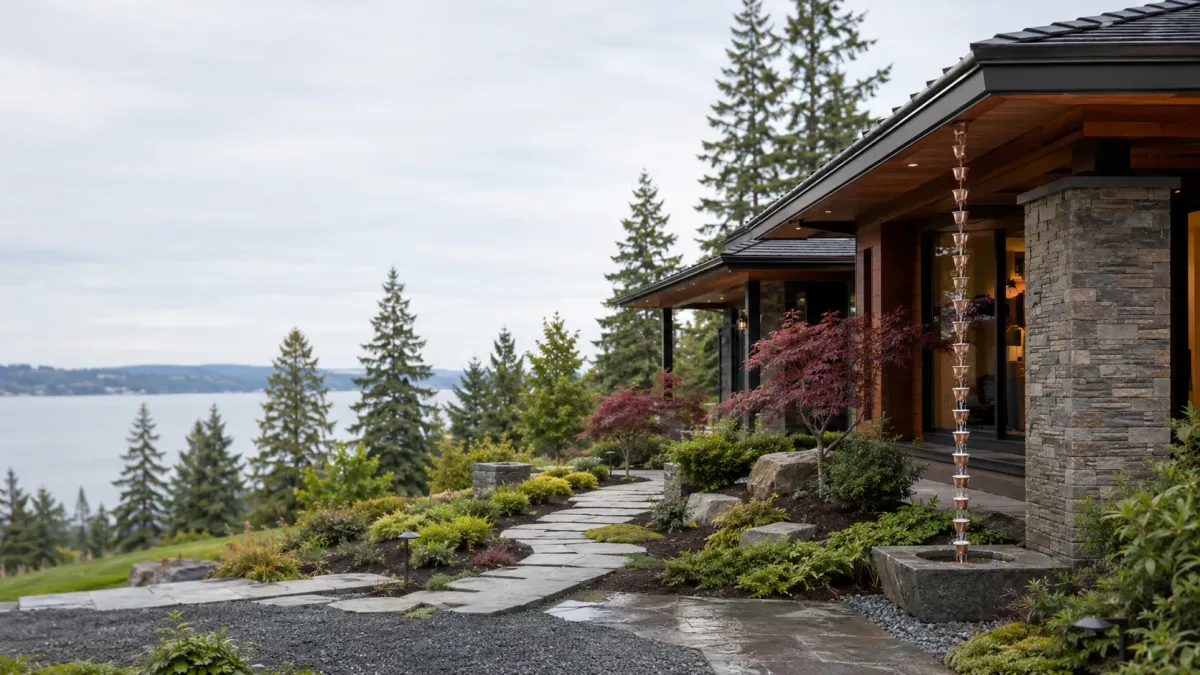
Rain chains and full drainage solutions designed for Redmond's sloped lots and heavy rainfall.
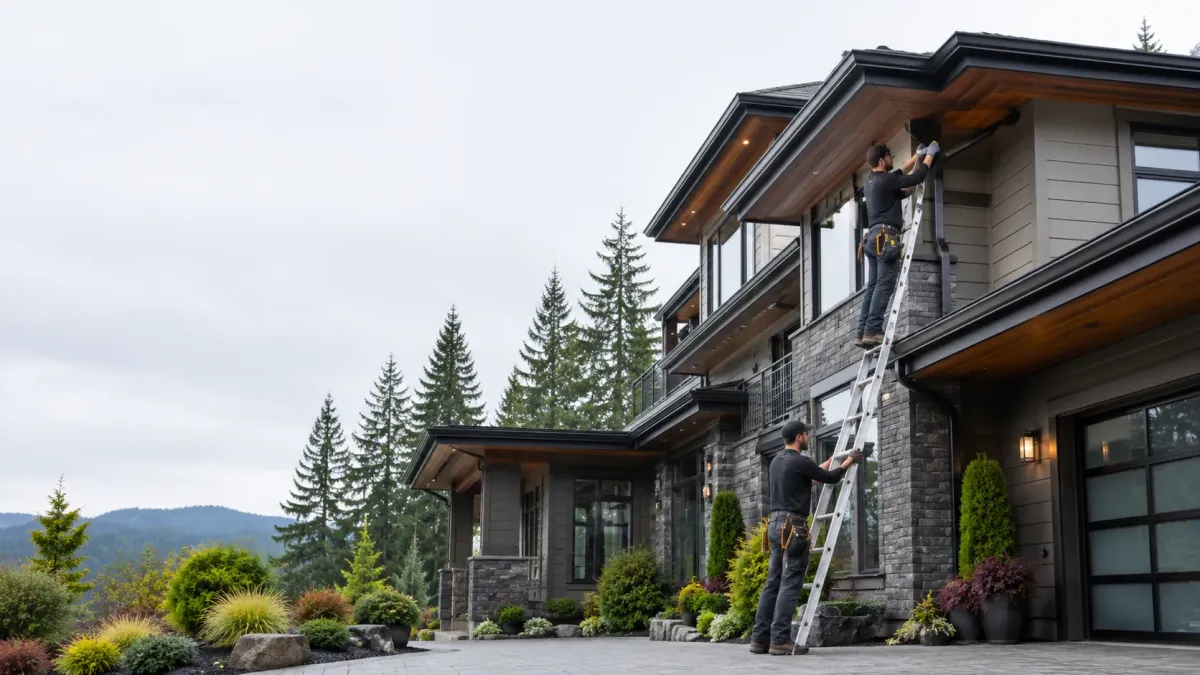
Soffit repair that stops the moisture intrusion behind failing Redmond gutters and eaves.
Reliable Gutter Cleaning and Gutter Installation in Redmond — Done Right, Every Time
At Redmond Gutter Pros, we specialize in complete gutter cleaning and installation, keeping homes throughout Redmond protected from the Pacific Northwest's relentless rain. Our cleaning service clears away leaves, needles, and debris that build up fast in Redmond's tree-lined neighborhoods, then flushes the entire system to confirm water is draining properly away from your home. When it's time for new gutters, we install durable, precision-fitted systems custom-sized to your roofline, with proper pitch and downspout placement to prevent pooling, erosion, and foundation damage. On every job, whether it's a routine cleaning or a full installation, we inspect for sagging sections, loose brackets, and early signs of wear so small issues get caught before they turn into costly repairs. Homeowners choose us because we're punctual, thorough, and reliable — showing up on time, doing the job right, and leaving your property spotless. Whether you need a one-time cleaning before the fall storms or a full gutter installation to protect your home for years to come, we make sure your gutters keep doing their job so the rest of your home stays protected.
Frequently Asked Questions
Gutter Installation can be complex, and we’re here to provide answers to common questions. Here are some frequently asked questions from our clients.
Frequently Asked Questions about Gutter Installation Redmond, Wa
What gutter size works best for Redmond's heavy rainfall?
For most Redmond homes we recommend 6-inch K-style seamless gutters paired with 3x4 downspouts. The larger profile handles Pacific Northwest rainfall volume and the steady runoff from Douglas fir canopies far better than standard 5-inch systems, which overflow during sustained winter storms.
Do I need a permit for gutter installation in Redmond?
Standard gutter and downspout replacement on an existing home generally does not require a City of Redmond permit. Work that ties into stormwater drainage, alters roofline structure, or affects fascia framing may need review, so we confirm local drainage code requirements before every install.
How do gutters hold up against Douglas fir needles and moss?
Evergreen debris is the number one reason gutters fail here. We install systems sized for high flow and recommend fine-mesh guards that shed fir needles while blocking moss buildup, keeping water moving through the wet months instead of pooling and rotting your fascia.
How often should gutters be cleaned in the Pacific Northwest?
Twice a year is the baseline for tree-lined Redmond neighborhoods like Education Hill and Grass Lawn, usually late spring and again in fall after needle drop. Homes under heavy Douglas fir or cedar coverage often benefit from a third visit to prevent winter overflow.
What gutter material lasts longest in Redmond's wet climate?
Seamless aluminum is the practical choice for most Redmond homes, resisting corrosion through constant moisture without rust. For premium projects, copper half-round systems offer decades of durability and develop a patina that suits Pacific Northwest craftsman and contemporary architecture.
How long does a gutter installation take?
Most Redmond single-family installs are completed in one day. Larger homes with complex rooflines, multiple stories, or fascia repair can run into a second day. We assess pitch, downspout placement, and drainage routing before scheduling so timelines stay accurate.
Still Have Questions About Gutter Installation Redmond, Wa?
Speak With a Trusted Gutter Installation Expert Today.
What Our Satisfied Clients Have to Say About Redmond Gutter Pros
We pride ourselves on delivering great results and experiences for each client. Hear directly from home and business owners who’ve trusted us with their Gutter Installation needs.

They installed 6-inch seamless gutters on our Education Hill home and added mesh guards for the fir needles. First winter with zero overflow. The crew clearly knew our climate.
Karen M.
Our fascia was rotting from years of overflow. They replaced the board, installed new downspouts routed away from the foundation, and the difference through the rainy season has been night and day.
David R.
We went with copper half-round gutters on our craftsman and they look incredible. Professional install, fair pricing, and they understood exactly what our shaded lot needed for drainage.
Priya S.
The Trusted Gutter Installation Expert Near You
Ready to hear more about expert services at Redmond Gutter Pros?
Contact us today to receive a detailed, no-obligation quote.